
Can You Repair an AC Compressor?
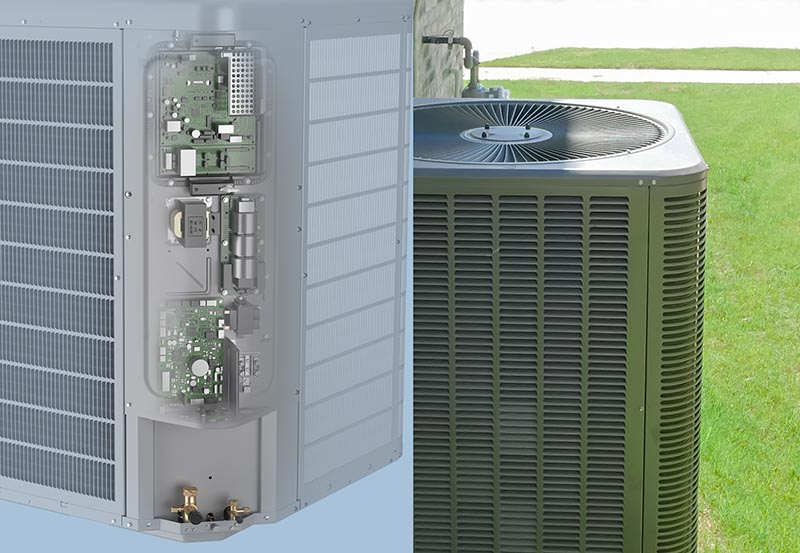
AC compressors act as the “heart” of a cooling system—circulating refrigerant and maintaining pressure—so any issue with them can quickly affect overall performance. So, it is no surprise that when an air conditioning system stops cooling properly, the compressor is often one of the first components HVAC technicians suspect.
A common question Campbell’s A/C LLC technicians get during air conditioning failure calls in and around Flagstaff, AZ, is: Can you repair an AC compressor without replacing it?
The answer is: sometimes, but it depends on the issue. In many cases, what appears to be an AC compressor failure may actually be a fixable issue with surrounding components. However, there are situations where replacement is the only practical solution.
This guide breaks down when AC compressor repair is possible, when replacement is likely, and how to make the most cost-effective decision.
What Does an AC Compressor Do?
The compressor plays a critical role in the refrigeration cycle. It compresses low-pressure refrigerant gas into a high-pressure state, allowing heat to be released outside and cool air to be circulated indoors.
Because it works under high pressure and temperature, the AC compressor is one of the most heavily used parts of an air conditioning system. It also happens to be one of the most expensive parts, with the replacement costing over $1,500 on average nationwide.
Signs You Need AC Compressor Repair
Because the AC compressor plays such a critical role in your cooling system, problems with it often show up as noticeable performance issues. Recognizing the early warning signs can help you address smaller problems before they turn into more serious (and expensive) failures.
Here are signs you may need AC compressor repair:
- Warm air from vents: If your AC is running but blowing warm or weakly cooled air, the compressor may not be circulating refrigerant properly.
- Unusual noises: Grinding, rattling, or banging sounds can signal internal damage or loose components inside the compressor.
- Circuit breaker trips frequently: If your system keeps shutting off at the breaker, the AC compressor may be overworking or experiencing electrical issues.
- Hard starting or won’t turn on: Struggling to start, delayed operation, or sudden shutdowns can indicate problems with the AC compressor or startup components.
- Reduced cooling or longer run times: If your AC runs constantly but doesn’t reach the set temperature, the compressor may be losing efficiency.
- Higher energy bills: A struggling AC compressor often consumes more power, leading to noticeable increases in your energy costs.
If you are experiencing one or more of these signs, there is likely something wrong with your air conditioner, and unfortunately, it may be the AC compressor that needs repair. Contact Campbell’s A/C LLC and our team will help diagnose and provide recommendations, including whether or not an AC compressor repair is needed (or possible).
Can My AC Compressor Be Repaired?
In many cases, yes; however, most “repairs” involve fixing components connected to or affecting the compressor. True AC compressor repairs are actually limited.
AC Compressor Common Problems That Can Be Repaired
- Electrical Issues
Electrical problems are one of the most frequent causes of a non-working compressor. In many situations, the compressor itself is still in good condition but isn’t receiving the power it needs to operate. Issues such as a faulty capacitor, a worn contactor, loose wiring, or a tripped breaker can prevent the system from starting. Fortunately, these are typically straightforward and usually inexpensive fixes. - Dirty or Blocked Coils
When coils become coated in dirt and debris, they can’t release heat effectively. This causes the compressor to overheat and, in some cases, shut down entirely. A professional cleaning can often resolve the problem, reduce strain on the system, and improve overall cooling efficiency. - Refrigerant Problems
Refrigerant-related problems can also mimic compressor failure. Low refrigerant levels or leaks in the system can prevent your AC from cooling properly, even if the compressor is still functioning. Detecting and repairing leaks, followed by a refrigerant recharge, can often restore the system’s performance without needing a compressor replacement. - Minor Mechanical Wear
In certain cases, minor mechanical wear may be to blame. Components that support compressor operation—such as valves or relays—can sometimes wear out over time. These parts can often be serviced or replaced independently, allowing the compressor to continue operating effectively. - Hard Start or Startup Issues
Startup issues can make it seem like the compressor has failed when it’s simply struggling to turn on. Installing a hard-start kit can help reduce the electrical load during startup. This not only improves performance but can also extend the lifespan of the compressor, making it a cost-effective solution in some situations.
When an AC Compressor Repair Is NOT Enough
While some air conditioning issues can be resolved with relatively simple repairs, there are situations where fixing the compressor isn’t practical—or even possible. In these cases, replacing the AC compressor (or sometimes the entire system) is recommended.
- Internal Mechanical Failure
If key components inside the AC compressor—such as pistons, bearings, or motor windings—become damaged, repair is rarely cost-effective. Accessing and fixing these internal parts requires specialized tools and extensive labor, which can quickly drive up costs. Because of this, HVAC professionals typically recommend full compressor replacement rather than attempting a repair. - Burnout or Electrical Failure Inside the Compressor
When a compressor burns out, it can release contaminants like carbon and acid into the entire AC system. This doesn’t just affect the AC compressor—it can damage other components as well. Properly addressing this issue often requires flushing the system and replacing additional parts, such as the filter drier or expansion valve. Due to the complexity and risk of ongoing damage, replacement is almost always the recommended course of action. - Age and Wear
If an older unit’s compressor fails, even a successful repair may only provide a short-term fix. Older systems tend to be less efficient and more prone to additional breakdowns. In many cases, investing in a replacement can provide better energy efficiency, improved performance, and greater reliability over time.
AC Compressor Repair vs. Replacement: How to Decide
Choosing between an AC compressor repair and replacement comes down to a few key factors:
1. Cost Comparison
- Minor repairs: usually affordable
- Major compressor replacement: often one of the highest HVAC repair costs
A general rule of thumb: If repair costs approach a significant portion of a new system, like 50% or more, replacement may be more practical.
2. System Age
- Newer units (under 8–10 years): repair is often worthwhile
- Older units: replacement is usually more cost-effective
3. Frequency of Issues
If you’ve experienced multiple breakdowns, the AC compressor failure may be part of a larger system issue. Continued, repetitive repairs can add up quickly and signal the need for replacement.
4. Energy Efficiency
Older AC compressors are less efficient; it’s just what happens over time. Even if repair is possible, a new compressor or even a new AC system may reduce long-term energy costs.
Contact Campbell’s A/C LLC for AC Compressor Repair
So, can you repair an AC compressor without replacing it?
Yes—in many cases, especially when the issue is electrical, airflow-related, or tied to supporting components. However, if the AC compressor itself has suffered internal damage or burnout, replacement is usually the more practical and reliable solution.
For the best outcome, it’s important to have the system properly diagnosed by an expert at Campbell’s A/C LLC. What seems like a major failure could be a relatively simple fix, and catching the problem early can make all the difference. Call us today at 928-326-3709 or request service online.